
Ecommerce growth guides for Indian businesses, online stores, grocery sellers, restaurants, cloud kitchens, and hyperlocal brands.

Vernacular Voice Commerce: India’s Next Billion Shoppers
Discover how vernacular voice commerce is bridging the digital divide in India. Learn why voice technology in regional languages is the key to unlocking the next billion e-commerce customers.

Namaste! My friend! Now imagine: it is an ordinary evening in a small town in Madhya Pradesh. Amit, who lives in a nearby Kirana store, is tidying his shop when he hears his neighbor Sunita speaking Hindi on her phone. “Accha, mujhe 5 kilo chawal chahiye,” she says. The app obeys the command, and her order is placed with the main, big marketplace immediately.
Does it still sound a bit like science fiction? That is no longer the case! Prepare yourself for the era of voice commerce, where individuals can shop in their mother tongue, transforming the online marketplace in Bharat forever. As an entrepreneur using tools like BuildMyStore.io, I’ll be giving information about the history of our local market, the challenges, and how vernacular voice commerce can be a way of accessing the next billion customers in India.

Why Vernacular Voice Commerce Matters
To be honest, India is not only large but also diverse. We have 22 recognized languages and more than 19,500 dialects. However, the irony is that just 10% of our populace can vaguely speak English. Therefore, we have been excluding a significant portion of potential e-commerce customers for an extended period. Nevertheless, it is over now.
Quick Stat
In the report from KPMG and Google, 70% of Indians have admitted that they trust voice searches more when compared to typed ones. This is not just a numerical statistic; it’s a strategy to succeed in the rapidly emerging market!
The Perfect Storm: Voice Tech Meets Language Power
1. The Rise of Voice Assistants
Do you recall a time when speaking on the phone seemed unusual? These days, speaking to a voice assistant seems to be the norm. Thanks to Natural Language Processing (NLP) and Artificial Intelligence (AI), voice assistants are continuously learning and becoming more intelligent. They don’t only recognise our accent clearer; they understand the context of the speech, which involves idioms, even sarcasm (you know how Chacha, your uncle, jokes).
Pro Tip
First things first, start experimenting with voice searches for regional languages for your products. It goes beyond simply taking keywords and translating them, even if the translation isn’t always correct. It’s important to understand that users often speak about trending topics in their own natural language, which may vary depending on their language proficiency.
2. Smartphone penetration in Bharat
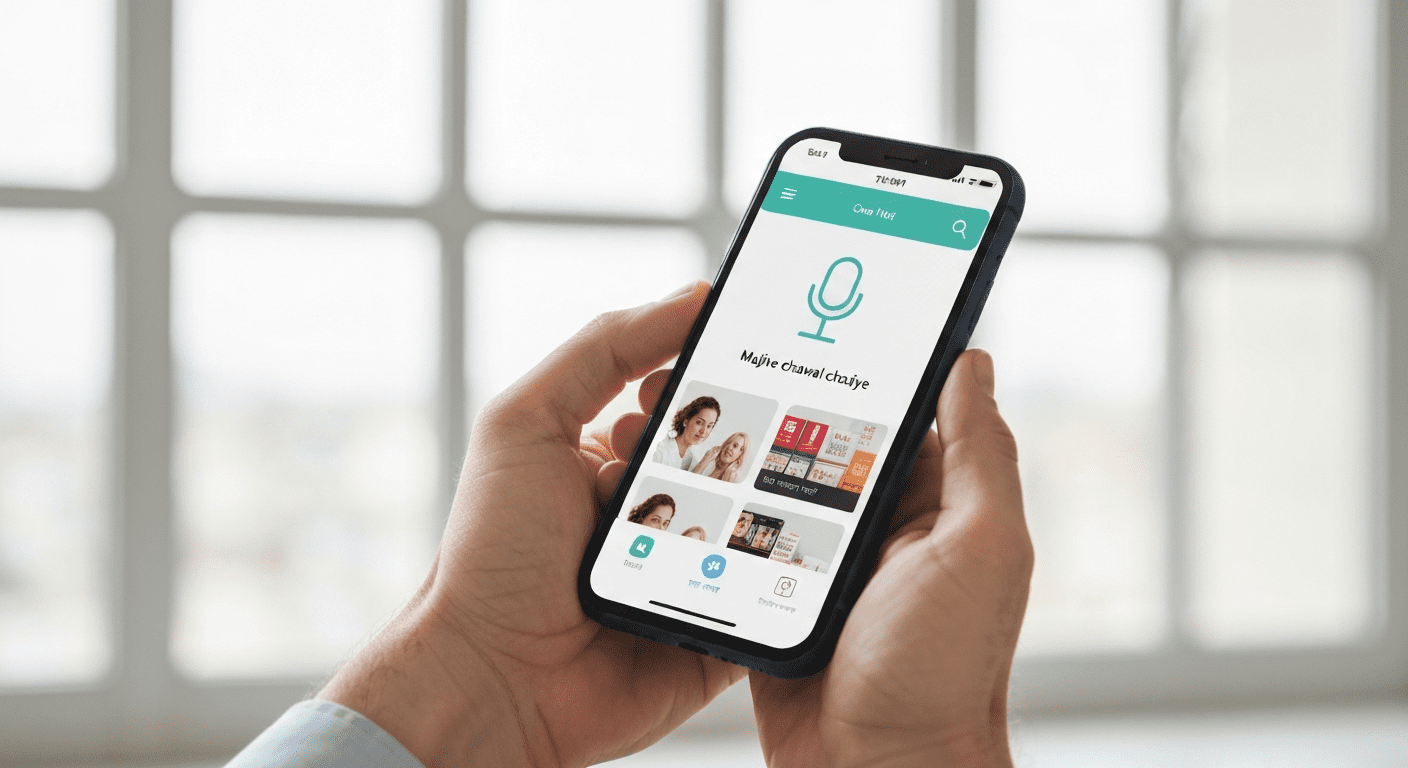
The smartphone revolution is not merely a metropolitan trend anymore. With data plans and devices becoming increasingly affordable, cities smaller than Tier 2 are now becoming full-fledged online centers or hubs. Thanks to cheap devices and data access provided by Jio, young Indians in smaller towns are embracing online life in large numbers. Recent studies have revealed that young netizens prefer using AI voice chats as their primary method. With BuildMyStore.io, businesses can launch an app in 30 seconds that is ready for this mobile-first future.
Quick Stat
According to Deloitte, non-metro areas will contribute significantly to India’s projected 900 million smartphone users by 2026.
3. The Trust Factor
One interesting observation I’ve made about the business is that clients from small towns tend to prefer voice calls over chat-based customer support. However, research has proven that hearing a human voice effectively builds customer confidence. Voice commerce uses this human aspect of the brain to make the process feel less like taking something from a machine and more like having a personal shopping assistant.
How to Ride the Vernacular Voice Commerce Wave
Ready to go? Here are some practical steps that might help you out:
1. Localize; don’t just translate.
First things first—this is not just another translation of your product descriptors to Google Translator and running them to the end of the road! A good translation is the art of localization. It is the culture, the language of the people, and social linguistic practice that count most in the language field.
Pro Tip
Use local content creators for creating voice commerce scripts or hire native speakers to compose your scripts. Authenticity will be the main characteristic of your product, and thus it will evoke feelings in the purchaser.
2. Optimise for Voice Search
Voice questions differ from typed ones. They’re basically the extended and more conversational versions of what you would have typed. For a better understanding, the person could ask, “Kaunsa phone accha hai jo 15 hazar ke andar aata hai,” instead of searching for the “best smartphone under 15000.”
We should redesign our SEO strategy to focus on long-tail, conversational keywords in local languages. Tools like Google’s Voice Search Report can aid companies in recognising voice search trends that are exact to their market areas.
3. Build Voice-Friendly User Interfaces
If voice commerce is your main aim, your app or website should be ready to support it. You can achieve this by designing interfaces that are highly voiceable.
Idea to Explore
Think about the possibility of a voice-based virtual shopping helper. It and a customer would stand as an alternate example, among all the other people, with a dialogue like “Mujhe kal ki shaadi ke liye ek acchi si saree dikhaao” and receiving personalised responses to it.
4. Leverage Vernacular Social Proof
Presenting feedback and endorsements in the customer’s language enhances their power. Urge and give special treatment by allowing voice reviews to the satisfied clients.
Quick Win
Begin a campaign that powers customers to leave voice reviews in their personal language. You could even offer small incentives to get things started.
5. Don’t Forget About Privacy
With enormous power comes great responsibility. Where the invoice of commerce expands, so does the topic of data privacy and security. Be upfront about how you process voice data and provide deliberate opt-out options for users.
Pro Tip
Suggest the development of a voice data policy that is clear and intelligible. To win the confidence of your vernacular audience, explain it using the simplest words in local languages.
The future is speaking (in many languages).
Before we conclude, I’d like to give my own example. A month ago, I helped my ajji (grandmother) order her most loved Mysore Pak through a voice-dominant app. When I witnessed the sparkle on her face after making her initial e-commerce purchase, that’s when I realised that vernacular voice commerce was not just a fashion; it was a reality.
The future e-commerce growth in India is not only in the big cities; it is going to come from Bharat. It will speak multiple languages, express queries, tell stories, and yes, it will use its voice to make purchases.
Can you be patient and listen as well as react?

Frequently Asked Questions
What is vernacular voice commerce?
Vernacular voice commerce is the ability for consumers to search for and buy products online using voice commands in their native regional languages like Hindi, Tamil, or Marathi, rather than typing in English.
Why should Indian businesses focus on voice search?
With only 10 percent of India’s population speaking English, voice search in local languages bridges the gap for the other 90 percent. Research shows Indians trust voice search more than typing, making it essential for reaching non-metro markets.
How can I optimize my online store for voice commerce?
You can optimize by using long-tail conversational keywords in regional languages, creating localized content rather than literal translations, and using platforms like BuildMyStore.io that support modern mobile-first retail features.