
Ecommerce growth guides for Indian businesses, online stores, grocery sellers, restaurants, cloud kitchens, and hyperlocal brands.
Zero Waste Retail: How the Harvest Day Model Beats Giants
Discover how the Harvest Day Model allows local vegetable vendors to eliminate waste and provide superior freshness that supermarkets cannot match using pre-order technology.

It is 6:00 AM. A massive truck pulls into the loading dock of a national grocery store chain. It unloads crates of tomatoes, spinach, and cauliflower. Those vegetables look fresh. They are shiny. They are green. But here is the dirty secret of the industry: They were likely harvested 4 to 7 days ago. They have been sitting in cold storage, traveling hundreds of kilometers, accumulating food miles. In that time, they have lost significant nutritional value and flavor.
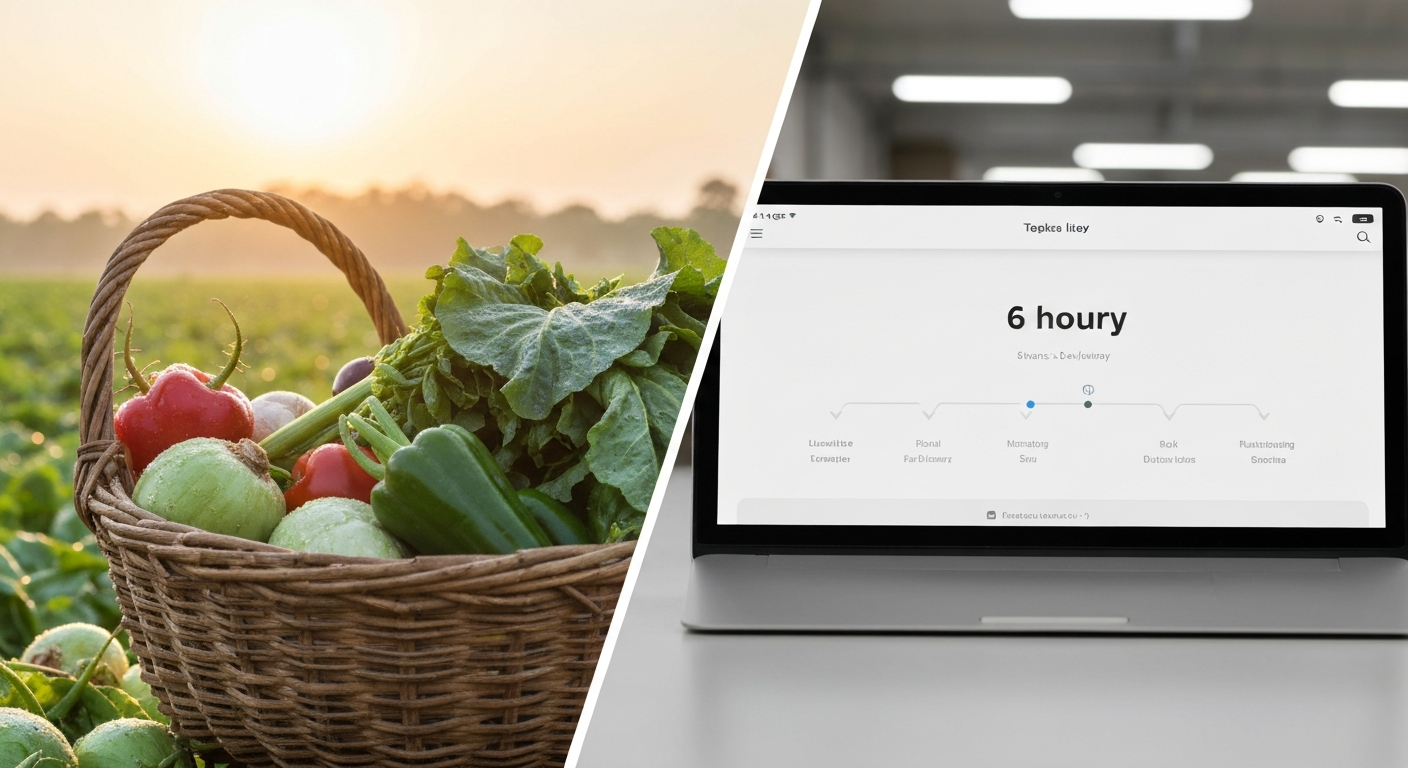
Now, look at your operation. You buy vegetables from the Mandi (wholesale market) in the morning, hoping to sell them by the evening. What you don’t sell today, you mark down tomorrow. What you don’t sell tomorrow, you throw away.
The Perishability Trap
Vegetable vendors lose 20-30% of their profit to waste. You are betting against the clock every single day.
But what if you could reverse the system? What if you sold the vegetables before you bought them? Or even better before you harvested them?
This is the “Harvest Day” Model. It is a radical supply chain innovation that guarantees Zero Waste Retail and beats the “fake freshness” of the giants.
1. The Supply Chain Lie: “Fresh” vs. “Cold”
Supermarkets and Quick Commerce apps compete on speed (10-minute delivery). To meet customers expectations for instant gratification, they must hoard inventory in dark stores.
- Their Model: Harvest -> Warehouse -> Truck -> Dark Store -> Customer. (Time: 3-5 Days).
- Your Advantage: You are local. You don’t need a warehouse.
- Your Model: Harvest -> Customer. (Time: 6-12 Hours).
You cannot beat the giants on speed (they are too fast). But you can destroy them on Freshness Guarantee. A tomato picked this morning tastes radically different from a cold-storage tomato. This Farm-to-Table freshness is your true competitive advantage. By cutting out the middlemen and storage time, you offer food products that are vastly superior in quality.
2. The Economics of “Pre-Ordering” (Zero Waste)
In the traditional business model, you buy 100kg of Spinach hoping to sell it. If you only sell 70kg, the remaining 30kg eats your bottom line. This waste is not just an environmental issue; it is a financial one.
In the Harvest Day Model, you flip the script using pre-order vegetables:
- Monday to Wednesday: Customers place orders on your BuildMyStore.io app.
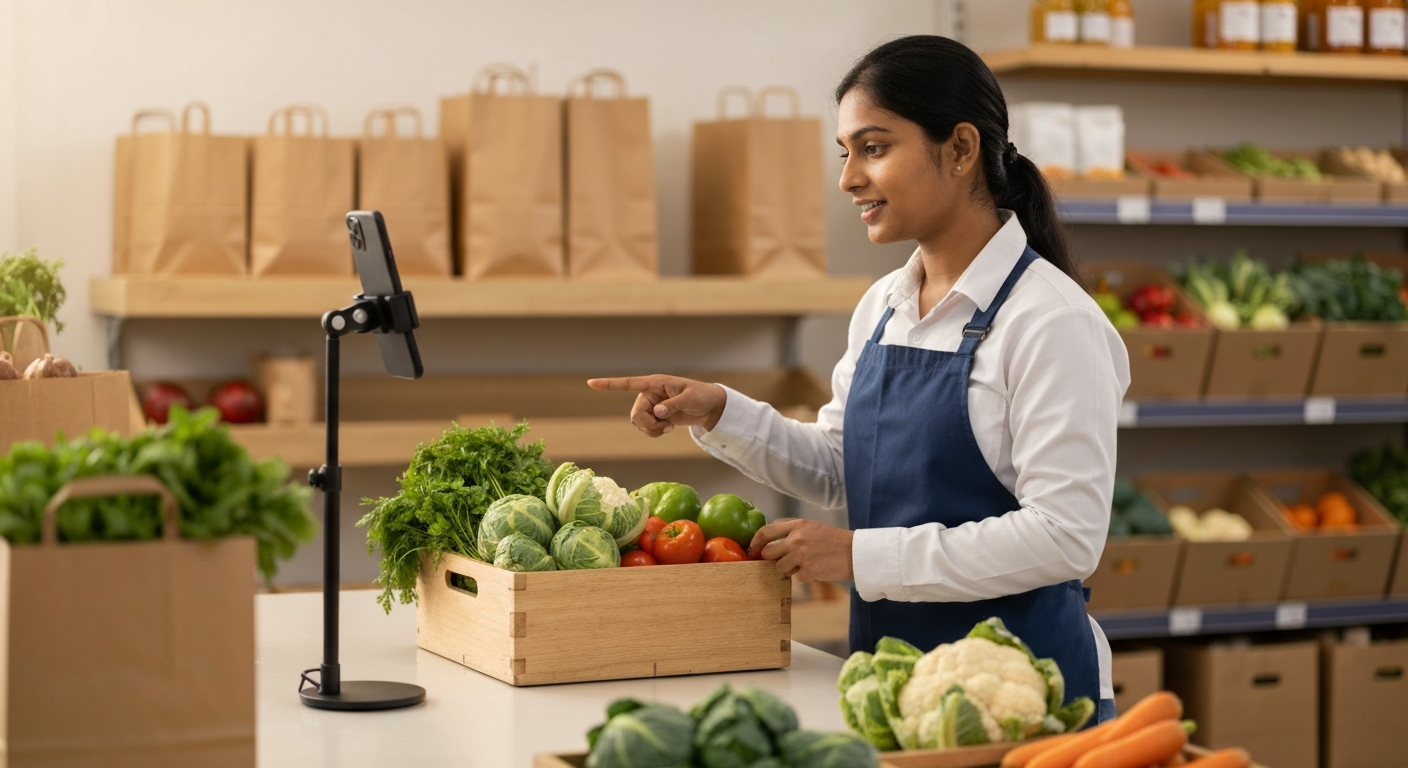
- Thursday Morning (Harvest Day): You harvest (or procure) exactly what was ordered.
- Orders: 50kg Spinach, 30kg Carrots.
- You Harvest: 50kg Spinach, 30kg Carrots.
Thursday Evening: Deliveries go out.
Financial Outcome
You succeed in your mission to eliminate food waste. Every rupee you spend on inventory is already sold. Your profit margin immediately jumps because you have reduced waste to zero. This is the most cost effective way to run a perishable business.
3. The “Mystery Box” Subscription: Modern CSA
Decision fatigue is real. Customers hate deciding “What vegetables should I buy?” every week. Solve this with the Vegetable Subscription Box. This is essentially a digital version of Community Supported Agriculture (CSA).
- Offer: “Weekly Seasonal Produce Box (5kg)” for ₹600.
- Content: Whatever is freshest on the farm that week.
This is a win-win:
- For Customer: They get the absolute best fresh produce without thinking. It save money compared to buying individual premium items and feels like a healthy surprise.
- For You: You get guaranteed, recurring revenue. You can plan your crop cycles effectively because you know you have 50 subscribers who will take 5kg each week over a long period of time. This consistency builds immense brand loyalty.
4. Creating Urgency: The “Limited Drop”
You don’t need to be open 24/7. In fact, being open all the time hurts the perception of freshness. Position your organic vegetable store as a “Limited Drop.”
Order window closes at 10 PM tonight for tomorrow morning’s delivery!
This is Scarcity Marketing. It trains your customers to order on your schedule, not theirs. When they know the shop “closes” for orders at 10 PM, they stop procrastinating and click “Buy.” This marketing strategy creates urgency and helps you consolidate orders for efficient delivery logistics.
5. The Solution: BuildMyStore for Fresh Produce
Managing pre-orders on WhatsApp is a nightmare. “Did Sharma ji ask for 500g Bhindi or 1kg?” To run this Direct to Consumer (D2C) model effectively, you need a system that handles the logistics of perishable goods.
How BuildMyStore.io Solves This:
- Cut-Off Times: Automatically stop accepting orders at 10 PM. No more late requests messing up your harvest plan.
- Inventory Management: Set limits. If you only expect 20kg of strawberries, the system marks “Sold Out” after 20kg is booked.
- Route Optimization: The system groups orders by neighborhood (e.g., “Sector 14 Route”), so your delivery tempo can drop 50 bags in one efficient loop.
- Automated Billing: Automatically bill customers weekly for their Veggie Box, ensuring cash flow security.
- Customer Data: Unlike selling to a wholesaler, you own the data. You can encourage customer retention by sending recipes for the specific vegetables they bought, which enhances customer satisfaction and builds trust.
Conclusion: Sell Taste, Not Commodity
If you sell “Potatoes,” you are selling a commodity. You are fighting on price against every other vendor. If you sell “Morning-Dug Potatoes delivered by noon,” you are selling a luxury service. You are selling an experience—the taste of real food.
The giants are stuck in their warehouses battling shelf life issues. You are on the ground. Use that advantage. Stop storing vegetables. Start selling freshness.
Ready to start your Zero-Waste store? Use BuildMyStore to launch your pre-order vegetable shop today. Harvest only what you sell, selling products that delight your customers, and transition to a truly sustainable business.
Frequently Asked Questions
How can I reduce waste in my vegetable business?
You can reduce waste by adopting a pre-order model. By collecting customer orders before procuring or harvesting the produce, you ensure that 100% of your inventory is already sold, eliminating the 20-30% loss typically seen in traditional retail.
What is the Harvest Day model in retail?
The Harvest Day model is a supply chain strategy where vegetables are harvested specifically to fulfill existing orders. This shortens the time from farm to table to under 12 hours, beating the 3-5 day window used by large supermarkets.
How do I start a pre-order vegetable business in India?
To start, you need a platform like BuildMyStore.io to manage orders and cut-off times. You then establish a relationship with local farmers or wholesalers, set a weekly delivery schedule, and use digital marketing to collect orders from your neighborhood.