Ecommerce growth guides for Indian businesses, online stores, grocery sellers, restaurants, cloud kitchens, and hyperlocal brands.
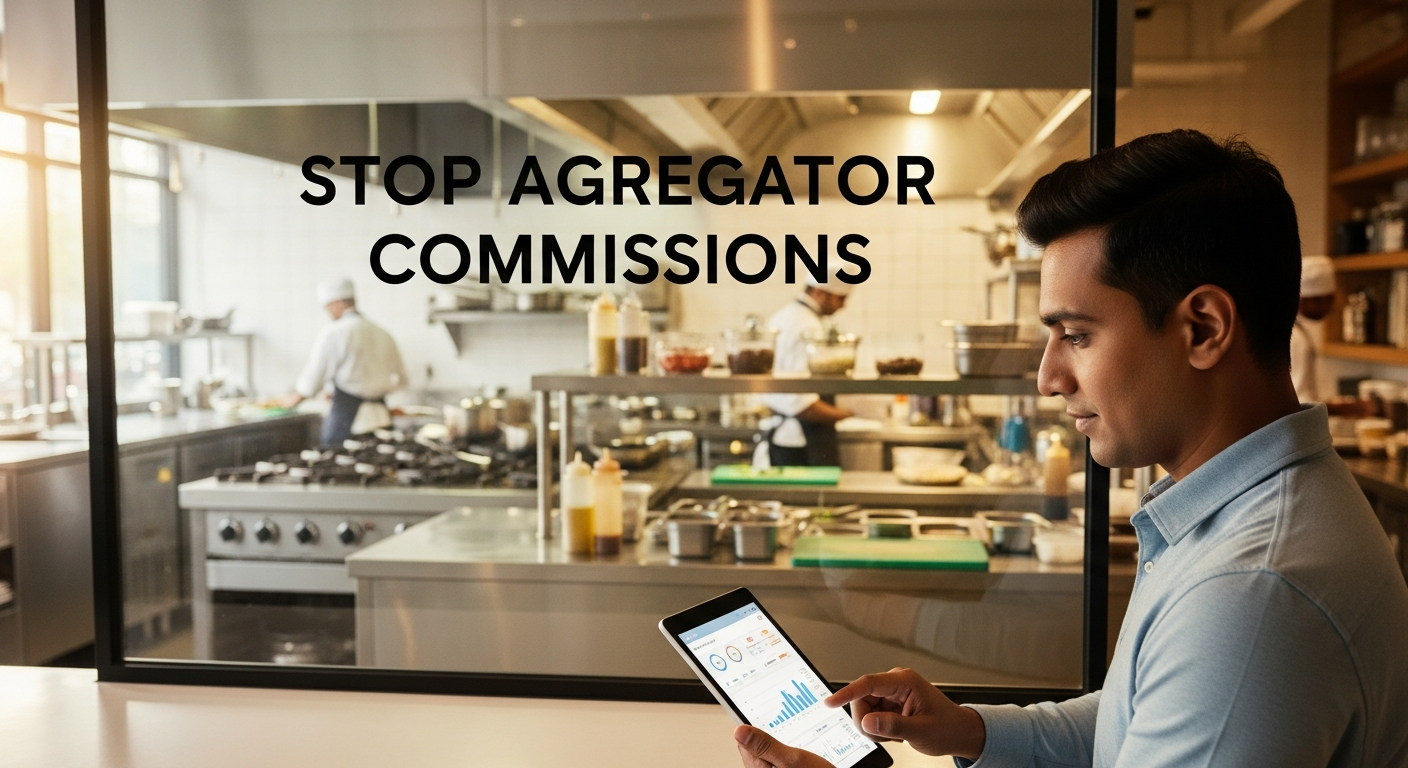
Zomato Commission vs Direct Ordering: The Real Math
Despite record-breaking sales, many restaurants see their bank balance barely move. Learn how the convenience tax paid to aggregators impacts your bottom line and how direct ordering changes the game.

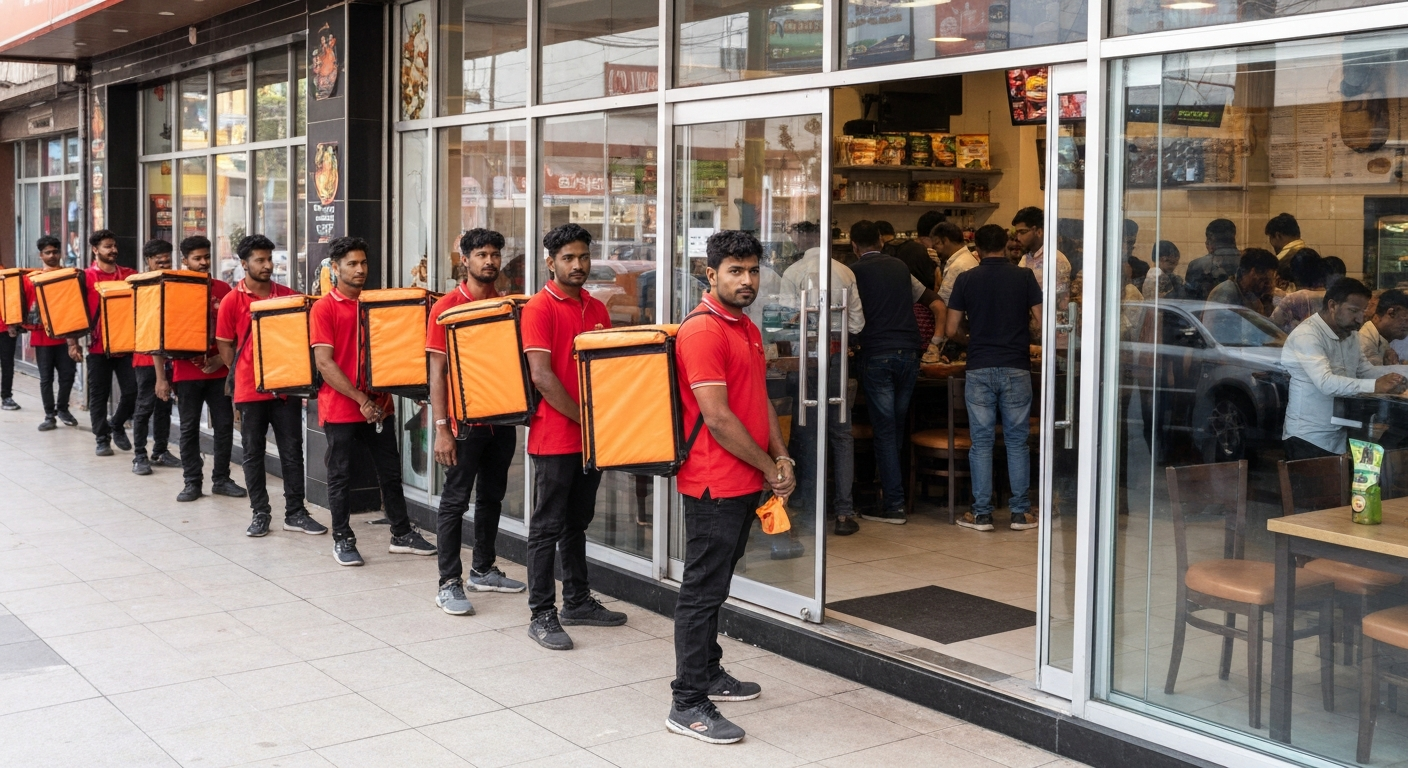
It is 8:30 PM on a Saturday. The energy in your restaurant is electric. The kitchen printer is buzzing rhythmically—zzzt, zzzt, zzzt—spitting out endless KOTs for Butter Chicken, Hyderabadi Biryani, and Hakka Noodles. Your chefs are moving in a synchronized dance, packing orders into plastic containers with practiced precision. Outside your glass doors, a fleet of delivery riders in bright red and orange t-shirts are lined up, waiting to whisk your food away.
From the outside, your business looks like a roaring success. You are the busiest spot on the street. Neighbors envy your volume. Competitors wonder what your secret is.
But when you sit down with your accountant at the end of the month, the story is heartbreakingly different. You stare at the settlement report and realize that despite record-breaking sales, your actual bank balance has barely moved. You are working harder than ever, churning out hundreds of orders, yet your net restaurant margins are thinner than a paper dosa.
Where is the money going?
The answer lies in the “Convenience Tax” you pay to aggregators like Zomato and Swiggy. While these platforms were instrumental in giving you visibility, they have evolved from partners into landlords. They are now taking a massive slice of your pie—often claiming up to 30% or more of your revenue.
For a local restaurant operating on tight food cost margins, this model is unsustainable. The only way to survive in 2026 is to stop renting your customers and start owning them. Here is the real math and the strategic roadmap for why you need a direct ordering system to break free from the commission trap.
1. The “Invisible” Cost: It’s Not Just 30%
Most restaurant owners operate under the dangerous assumption that they pay a standard, fixed Zomato commission—perhaps 22% or 25%. They view this as a necessary marketing expense. But if you scrutinize your weekly settlement report and analyze the unit economics, you will discover that the real cost is often much higher.
The “Hidden” Deductions that Bleed You Dry:
• Ad Spends & Boosts: Visibility on these apps is no longer organic; it is “pay-to-play.” To appear in the “Top Picks” for your neighborhood or rank higher than the new cloud kitchen next door, you are forced to pay for “Cost Per Click” (CPC) ads. This marketing cost is deducted directly from your payout.
• Forced Discounting: Are you participating in the “Gold” or “Pro” programs? Are you running a “60% OFF” campaign to stay relevant? While the aggregator might subsidize a small fraction, you are often pressured to fund the bulk of that discount. This creates a “race to the bottom” where you erode your gross margin just to get an order.
• The Refund Trap: Aggregators prioritize the end customer experience above all else. If a customer claims “spilled gravy” or “missing item,” the platform frequently processes an instant refund without your verification. You lose the food cost, the packaging cost, and the revenue, often with no way to appeal.
When you aggregate the base commission, ad spend, payment gateway charges, deep discounts, and cancellation losses, your effective “Cost of Sale” can easily touch 40-45%. That leaves you with barely enough to cover raw materials (30%), rent (10%), and staff salaries (15%), essentially pushing you into a loss on every delivery order.
2. The Math: Aggregator vs. Your Own App
Numbers do not lie. To truly understand the impact on restaurant profitability, let’s break down the financials of a standard family dinner order of ₹1,000.
Scenario A: The Aggregator Order When a customer orders via a third-party app, your revenue is sliced immediately.
- Order Value: ₹1,000
- Less Commission (Avg 25%): -₹250
- Less Marketing/Ad Spend: -₹50
- Less Payment Gateway Fee (2%): -₹20
- Delivery Cost: ₹0 (Handled by the platform)
Net Revenue to You: ₹680
Scenario B: The Direct Order (Your App) When that same customer orders on your own branded app, the math changes completely.
- Order Value: ₹1,000
- Less Commission: ₹0
- Less Marketing/Ad Spend: ₹0 (Organic retention)
- Less Payment Gateway Fee (2%): -₹20
- Less Delivery Cost: -₹60 (You pay a partner like Dunzo/Shadowfax)
Net Revenue to You: ₹920
The Bottom Line: On a single order, you generate ₹240 more simply by bypassing the middleman.
Scaling the Profit: 10 Orders a Day Shift
• Daily Extra Profit: ₹2,400
• Monthly Extra Profit: ₹72,000
• Yearly Extra Profit: ₹8.6 Lakhs
That extra ₹72,000 a month is not just “pocket money.” That is enough to cover the salaries of your head chef and two helpers. It is enough to pay your shop rent. It is the capital you need to upgrade your kitchen equipment. It is the difference between struggling to survive and having the cash flow to grow.
3. The Data Trap: Who Owns the Relationship?
While the financial loss is painful, the strategic loss is even worse. In the modern digital economy, data is power. By relying solely on aggregators, you are giving away your most valuable asset: Customer Data.
When a customer orders Chole Bhature from you on an aggregator app, the platform captures all the intelligence.
- They know the customer’s name and phone number.
- They know their birthday and anniversary.
- They know their ordering frequency.
- They know their taste preferences (Spicy vs. Mild).
What do you know? You know nothing. You receive an anonymous “Order ID #4921.” You fulfill the order, and the relationship ends there. You cannot send that customer a WhatsApp message next week. You cannot wish them a Happy Birthday. You are operating in the dark.
The aggregator owns the relationship; you are merely a ghost kitchen fulfilling their demand. With your own mobile app (powered by platforms like BuildMyStore.io), you reclaim this data. You build a proprietary database of 5,000 local residents. You gain the power to send a push notification on a rainy Tuesday: “Raining heavily? Get 10% off on hot Pakoras and Chai today.” This ability to retain customers and increase their customer lifetime value is what builds a resilient brand.
4. Operational Control: Stop Being Bullied
Beyond money and data, there is the critical issue of operational autonomy. On aggregator platforms, you are subject to their “Algorithm Anxiety” and policy changes, over which you have zero control.
- The “Closed” Shop: If their rider fleet is busy due to rain or high demand, they might arbitrarily show your restaurant as “Unserviceable” or “Temporarily Closed,” killing your peak hour sales even though your kitchen is ready to cook.
- Menu Pricing Restrictions: They often restrict you from offering different prices on different channels, forcing you to maintain price parity even though their commissions are higher.
- Dispute Resolution: If a rider spills the food or delivers it late, the platform often penalizes you, hurting your rating and visibility.
When you run your own direct ordering channel, you are the captain of the ship.
- Radius Control: You decide your delivery radius. If you want to serve a loyal customer 7km away, you can.
- Refund Policy: You decide your refund policy. You can handle customer complaints directly with a human touch, offering a replacement or a voucher instead of a cold cash refund. This turns an angry customer into a loyal one.
- Priority: You prioritize your loyal customers, ensuring they get the best service during rush hours.
5. The Conversion Strategy: “Discover There, Keep Here”
We must be realistic. You cannot delete the aggregator apps overnight. They are massive discovery platforms with millions of users, and you need them to find new customers. Your strategy should be a hybrid model: “Acquire on Zomato, Retain on Direct.”
Tactics to Shift Consumer Behavior:
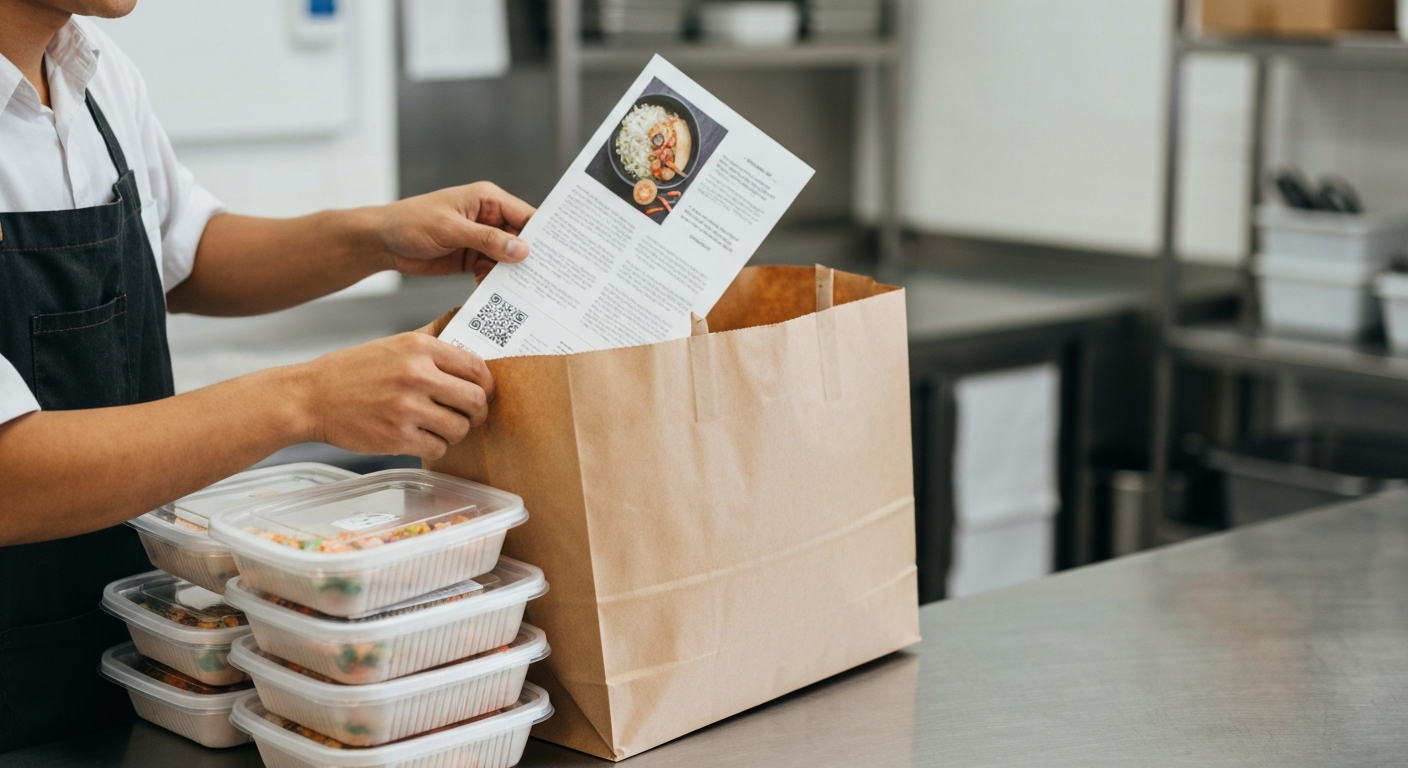
• The “Flyer in the Bag” Strategy: Every single order you pack for an aggregator must have a high-quality, glossy flyer inside.
• The Hook: “Loved the food? Order direct next time and get 20% OFF + Free Gulab Jamun. Scan this QR code to download our App.”
• Price Advantage: Be transparent. Pass some of your commission savings to the customer. If a dish is ₹300 on the aggregator, list it for ₹270 on your app. The customer saves money, and you still make significantly more profit margin.
• Exclusive Items: Create “App-Only” specials. Maybe your “Chef’s Special Mutton Curry” is only available on your direct app. This creates scarcity and forces foodies to switch platforms.
• The Loyalty Loop: Aggregators have generic loyalty programs. You can build a specific, gamified one. “Order 5 times on our app, get the 6th meal FREE.”
6. The Solution: Democratizing Technology with BuildMyStore
In the past, the biggest barrier to direct ordering was technology. Building a custom restaurant app used to cost lakhs of rupees and required a dedicated IT team. A small restaurant owner could not afford it. Today, that barrier has vanished.
BuildMyStore.io has democratized this technology, allowing any local restaurant to launch a professional delivery app in days.
- Visual Digital Menu: Upload beautiful, mouth-watering photos that drive higher conversions. You can update prices and “Out of Stock” items in real-time.
- Rider Management: You are not forced to hire full-time riders. You can assign orders to your own staff for nearby deliveries or seamlessly integrate with third-party logistics partners (like Dunzo, Shadowfax, or Porter) directly from the dashboard.
- Marketing Tools: Built-in features to send SMS and Push Notifications to your customer base. Run flash sales and festival offers with a single click.
- Zero Commissions: Most importantly, you pay a small subscription or tech fee. You do not pay a percentage of your hard-earned sales. Your growth is yours to keep.
Conclusion: Take Back Your Kitchen
Aggregators are excellent tools for marketing and discovery, but they are terrible partners for long-term restaurant profitability. Relying on them for 100% of your food delivery business is a dangerous gamble.
If they decide to increase commissions to 35% tomorrow, or if they prioritize your competitor’s “sponsored” listing over yours, your business suffers immediately. By building your own direct ordering channel, you build an insurance policy for your livelihood. You protect your margins, you own your customer data, and you secure your future.
Ready to stop sharing your profits? Don’t let the “Convenience Tax” bleed your business dry. Use BuildMyStore.io to launch your restaurant’s direct delivery app today. Serve your customers, not the algorithm.
Frequently Asked Questions
What is the total effective Zomato commission for most restaurants?
While the base commission is often 22-25%, the effective cost of sale can reach 40-45% when you include mandatory ad spends, forced discounts, payment gateway fees, and losses from customer refunds.
How does a direct ordering app help with restaurant profit margins?
By using your own app, you eliminate the 25% aggregator commission. Even after paying for third-party delivery logistics (approx. ₹60 per order), you can save significantly more per order, often adding lakhs to your yearly bottom line.
Can I still use Zomato and Swiggy while having my own app?
Yes, a hybrid strategy is recommended. Use aggregators for customer discovery and your own app powered by BuildMyStore for customer retention and high-margin repeat orders.
Do I need to hire my own delivery riders for a direct app?
No, you can integrate with logistics partners like Dunzo, Shadowfax, or Porter through your BuildMyStore dashboard. This allows you to pay for delivery only when an order is placed.