Ecommerce growth guides for Indian businesses, online stores, grocery sellers, restaurants, cloud kitchens, and hyperlocal brands.
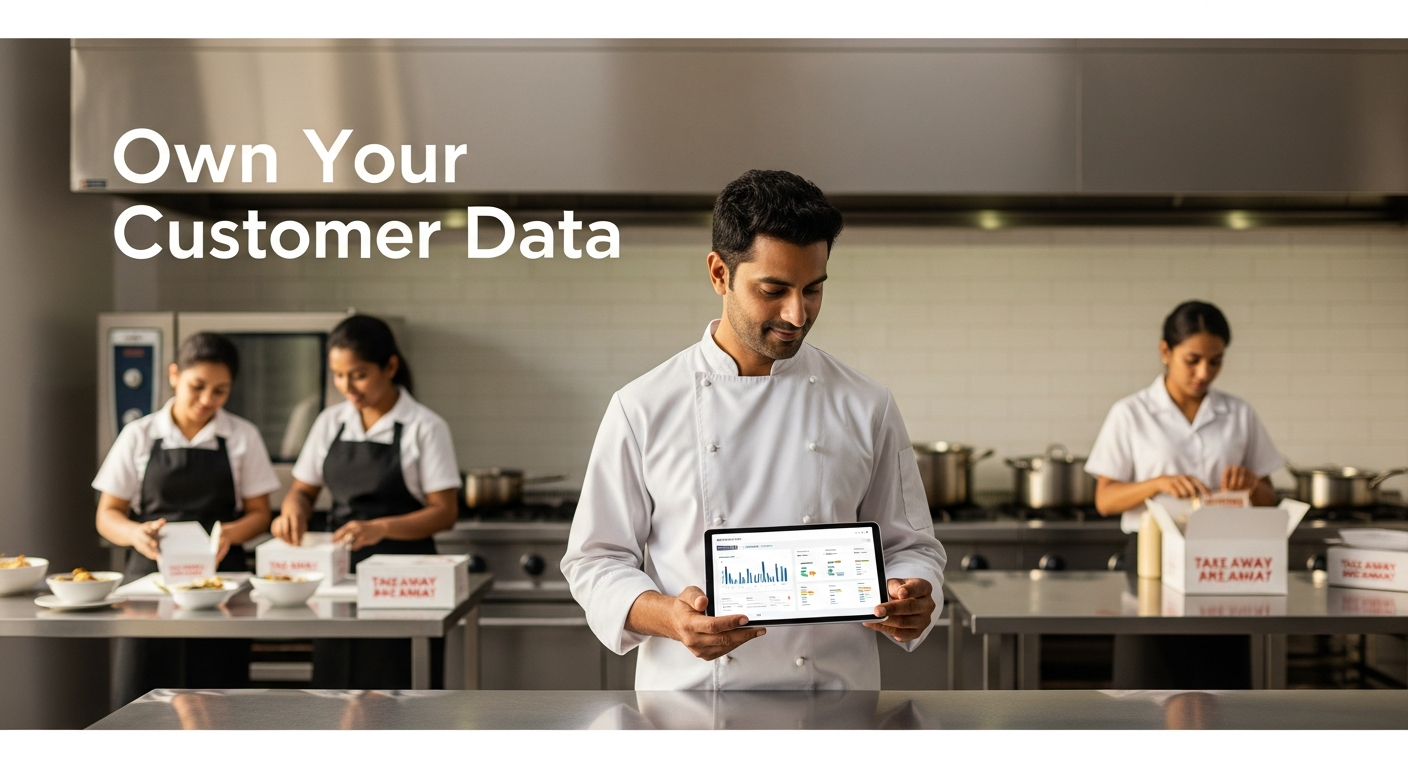
Customer Data Ownership: Why Aggregators Are a Data Trap
Relying on food aggregators like Swiggy and Zomato for 100% of your orders creates a 'Data Trap.' Learn why customer ownership is the only way to build a scalable and valuable restaurant brand.

Many restaurant owners measure success by “Order Volume.” If the printer is buzzing, business is good. However, smart investors and scalable brands measure success by a different metric: Customer Ownership.
If you are generating ₹10 Lakhs a month on Swiggy or Zomato, but you cannot download a list of your customers’ phone numbers, your business is technically “fragile.” You are dependent on a third-party platform that controls your traffic, your visibility, and your customer relationships.
This phenomenon is known as the “Data Trap.” It is the single biggest strategic risk for cloud kitchens and restaurants in 2026. Here is an analysis of why relying on aggregators for 100% of your orders devalues your brand, and the strategic framework to reclaim your customer data.
1. The Asset vs. Liability Framework
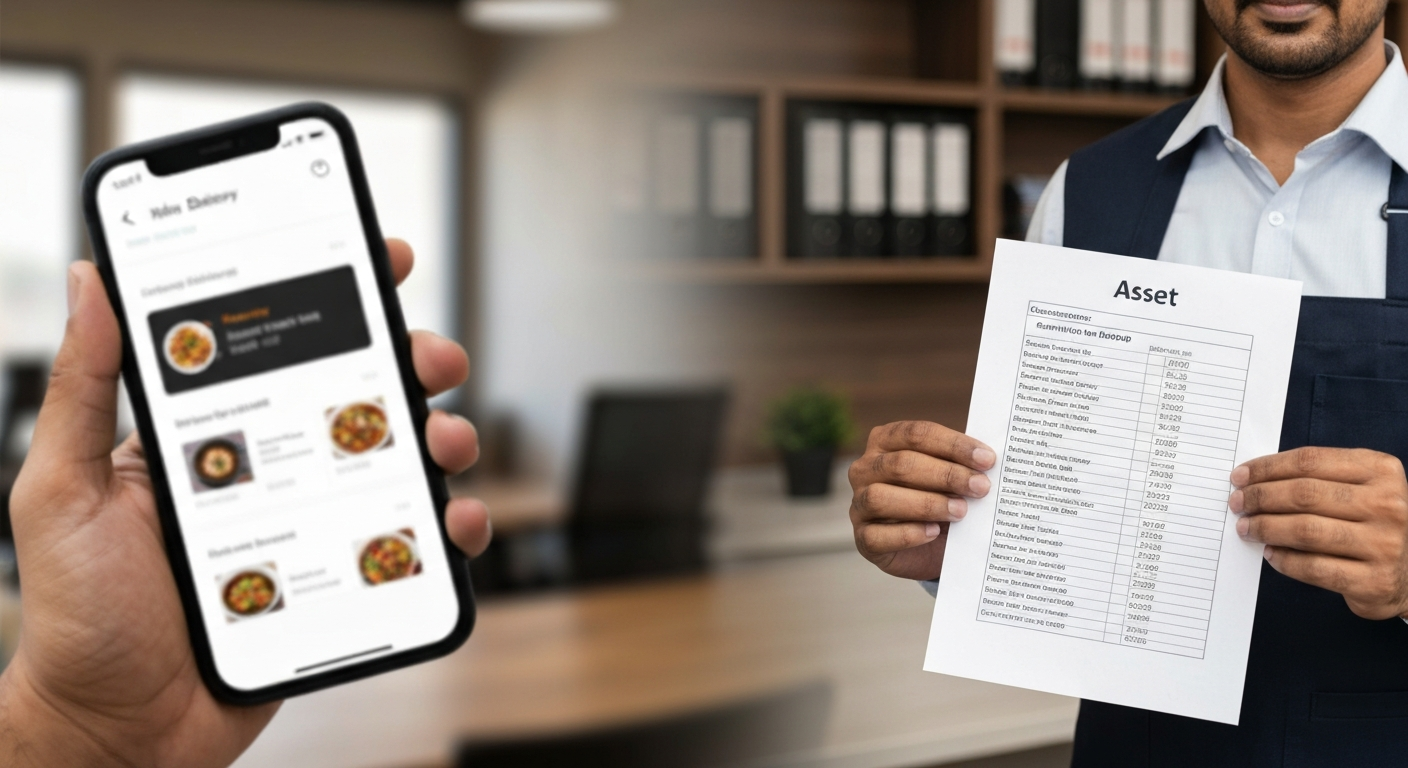
In the modern digital economy, Customer Data is an asset class.
- Asset: A list of 5,000 verified phone numbers of people who love your food. You can reach them anytime for free.
- Liability: A dependency on an algorithm that charges you 30% to reach the same people repeatedly.
When you rely solely on aggregators, you are building a liability. You are effectively a “Ghost Kitchen” not just in operations, but in relationship terms—you are invisible to your own customers. To them, you are just a menu listing. If the platform delists you, your revenue drops to zero overnight because you have no direct line of communication.
2. The Economics of “Re-Acquisition”
Marketing should function as a funnel: You pay to acquire a customer once, and profit from their Lifetime Value (LTV). The “Data Trap” breaks this model. It forces you to pay for the same customer over and over again.
The Scenario
A customer, “Rahul,” orders from you every Friday. Because Swiggy masks his data, you cannot recognize him as a loyalist. You cannot send him a direct loyalty reward. Instead, every Friday, you compete for Rahul’s attention against 50 other restaurants on the app. To win him back, you often have to run CPC ads or offer discounts. The Result: You are paying Customer Acquisition Cost (CAC) on a loyal customer. This destroys your unit economics and keeps your margins permanently depressed.
3. The “Blind Marketing” Problem
Without data, your marketing strategy is based on guesswork, not intelligence. When sales dip, aggregator-dependent restaurants typically run generic “Flat 20% OFF” campaigns. This is inefficient because you are discounting for everyone—even those who would have paid full price.
The Data Advantage: If you owned your customer list via your own platform (like BuildMyStore.io), you could segment your audience:
- Segment A (Loyal): Orders 3x a month. Strategy: No discount needed. Send “Early Access” to new menu items.
- Segment B (Lapsed): Hasn’t ordered in 45 days. Strategy: Send a “We Miss You” coupon.
This Precision Marketing is impossible inside the “Data Trap.”
4. Valuation and Exit Strategy
If you plan to sell your restaurant or raise investment, data is a critical valuation multiple. An investor will ask: “Do you own your customer base?”
- Answer A: “No, they are all on Zomato.” -> Low Valuation. (High Risk).
- Answer B: “Yes, I have a CRM with 15,000 active users and their order history.” -> High Valuation. (Predictable Revenue).
By ignoring data capture, you are actively lowering the long-term value of your company.
5. The “Trojan Horse” Strategy: How to Escape
You cannot simply delete aggregator apps; they are essential for discovery. The strategy is not exclusion, but conversion.
The Goal: Use aggregators to acquire the customer once, then move them to your direct channel.
Tactical Execution
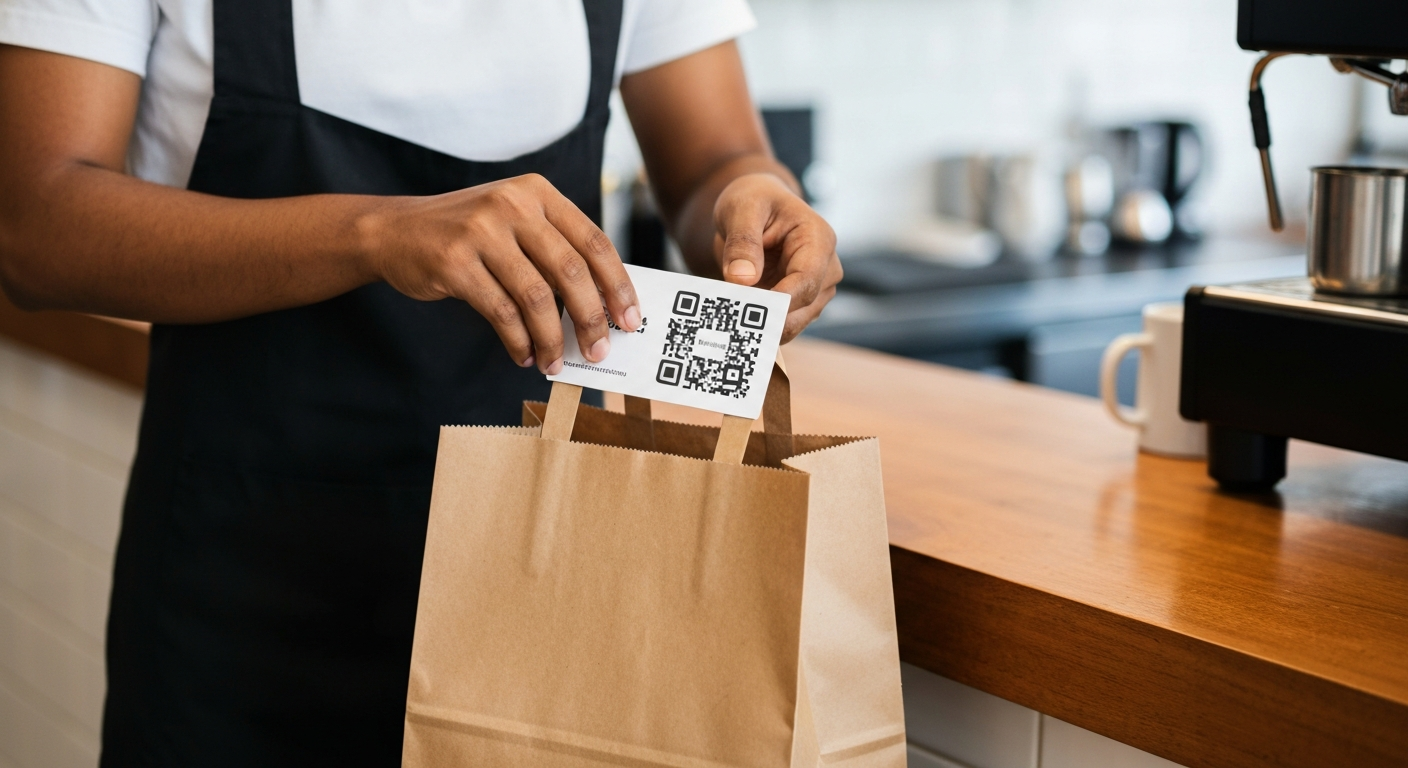
1. The Unboxing Experience: Place a high-quality insert in every aggregator order. Call to Action: “Scan to join our VIP Club & get a Free Starter.”
2. The Digital Hook: The QR code leads to your own web app (built on BuildMyStore.io). To redeem the offer, the customer enters their Name and Phone Number.
3. The Lock-in: Once they are in your system, incentivize their next order with loyalty points or exclusive menu items available only on your app.
6. The Solution: BuildMyStore as Your Data Engine
To execute this strategy, you need infrastructure. BuildMyStore.io provides the technological backbone to function as a data-first company.
- CRM Integration: Automatically captures and organizes customer profiles (Name, Phone, Location, Order History).
- Direct Communication: Built-in tools to send SMS, WhatsApp, and Push Notifications directly to your list, bypassing the aggregator “gatekeeper.”
- Ownership: Unlike aggregators, you own the data. You can export it, analyze it, and use it to build “Lookalike Audiences” on Facebook/Instagram for better ad targeting.

Conclusion
Stop viewing aggregators as your partners; view them as Lead Generation Channels. Their job is to introduce you to a customer. Your job is to capture that customer’s data and build a direct relationship.
The transition from “Aggregator Dependent” to “Data Owner” is the most critical shift for your business survival. It protects your margins, secures your future revenue, and turns your restaurant into a valuable asset.
Ready to own your traffic? Break the data trap. Use BuildMyStore.io to launch your direct ordering platform and start building a customer list that belongs to you.
Frequently Asked Questions
How can I get customer phone numbers from Swiggy or Zomato orders?
Aggregators typically mask customer data to maintain control over the relationship. To get phone numbers, you must use a ‘conversion’ strategy, such as placing a QR code in your packaging that offers a discount or loyalty reward when they order directly through your BuildMyStore.io site.
Is it expensive for a small restaurant to set up a direct ordering system?
No. Modern platforms like BuildMyStore.io are designed for Indian SMBs and allow you to launch a professional ordering app and website in seconds at a fraction of the cost of aggregator commissions. This helps you save on the 25-30% fees charged by third-party apps.
Why is direct customer data important for my restaurant’s valuation?
Investors look for predictable and sustainable revenue. If you own your customer data, you can prove that you have a loyal base you can reach without paying for ads. This reduces risk and significantly increases the long-term value of your business compared to being entirely aggregator-dependent.