
Ecommerce growth guides for Indian businesses, online stores, grocery sellers, restaurants, cloud kitchens, and hyperlocal brands.
Tiffin Service Management: Scaling Beyond Manual Excel Sheets
Managing a growing tiffin service manually leads to operational chaos and profit leakage. Discover how digitizing your subscription model can save hours and stabilize your cash flow.

It is 8:00 AM on a Monday. Your commercial kitchen is bustling with activity. The smell of Dal Tadka and freshly made Rotis fills the air as your staff works quickly to pack hundreds of stainless steel containers. To an outsider, your business looks successful and busy.
But as the owner, you are not focused on the food. You are paralyzed by operational stress.
You are staring at your phone, which is flooded with 150 unread WhatsApp messages.
- “Sir, I am traveling for a week. Please stop my tiffin.”
- “Bhaiya, I am fasting today. Don’t send lunch.”
- “Did you receive my payment for last month? Please check.”
The Dabba Dilemma
You frantically switch between a messy Excel sheet and a physical notebook, trying to update the list before your delivery riders leave. You are terrified of making a mistake. But inevitably, in the chaos, a mistake happens. A meal is delivered to a customer who cancelled. The customer gets angry, and you lose the cost of the food, the packaging, and the delivery.

Managing 50 subscribers on WhatsApp is possible. Managing 500 is a logistical nightmare. If you want to scale your tiffin service in the competitive market of 2026, you cannot run your business like a traditional canteen. You need modern tools like BuildMyStore.io.
Here is a detailed analysis of why manual lists are hurting your profit margins and how a digital subscription system can save you hours of work every single day.
1. The Complexity of Recurring Orders: It’s Not Just a Restaurant
To understand the problem, we must first understand how a tiffin business is different from a regular restaurant. A standard restaurant operates on simple, one-time orders. If they mess up an order, they lose one sale. A tiffin service, however, manages complex, long-term relationships. A single subscriber represents about 60 interactions a month (Lunch and Dinner).
When you try to manage this volume manually, the complexity explodes.
- Customization: You have hundreds of customers. Some want “No Rice,” some want “Extra Roti,” and others want “Non-Veg only on Wednesdays.” keeping track of these preferences manually is impossible to do perfectly every day.
- Schedule Changes: Your customers have dynamic lives. They travel for work, they fall sick, or they observe religious fasts. They expect you to handle these schedule changes instantly, without them having to call you.
- Renewals: The administrative task of chasing 500 people for payments on the 1st of every month is a massive drain on your time. It distracts you from growing your business.
Relying on human memory for these details guarantees revenue leakage. Every mistake is money leaking out of your pocket.
2. The Cost of Mistakes: Analyzing the “Pause” Problem
Let’s look at the financial impact of a single communication failure. A customer sends you a WhatsApp message at 9:00 PM: “Skip my meal tomorrow.” Because you received 50 other messages at the same time, you miss this one. You forget to tell your packing team.
Financial Impact Analysis
• Food Cost: ₹40 (Wasted ingredients)
• Packaging & Overhead: ₹5 (Wasted material)
• Delivery Cost: ₹15 (The rider traveled for no reason)
• Total Loss per Error: ₹60.
This might seem small. But if this happens just 3 times a day—which is very common for a business with 500 subscribers—the total loss is ₹5,400 per month. That is ₹65,000 a year of pure profit thrown into the dustbin because of manual errors.
With an automated app system, the customer taps a “Skip Meal” button on their phone. The system instantly updates your kitchen list and the rider’s delivery route. There is no confusion, and importantly, zero food waste.
3. Revenue Assurance: Moving from Credit to Prepaid
The most difficult part of the traditional tiffin model is the Udhaar (Credit) cycle. You feed the customer for 30 days, essentially acting as a bank for them. You send a bill on the 1st. The customer pays on the 10th, the 15th, or sometimes they argue about the bill.
This delay destroys your cash flow. You need money to buy vegetables and pay staff today, but your money is stuck with your customers.
The Solution: A Digital Wallet
The strategic move is to switch to a Pre-Paid Model using a digital wallet.
- How it works: The customer recharges their App Wallet with ₹3,000 in advance.
- Automatic Deduction: Every time a tiffin is delivered, the cost (e.g., ₹100) is automatically cut from their balance.
- Reminders: When the balance drops below ₹200, the app automatically reminds them to recharge.
- Policy: If the balance hits zero, the subscription stops automatically.
This removes the headache of collecting payments. You secure your revenue in advance, which stabilizes your finances and allows you to plan better.
4. Smart Logistics: Why Route Optimization Matters
Your last mile delivery team is your biggest variable cost. Fuel and time are money. If a rider travels to Sector 4 for one delivery, then goes to Sector 9, and then comes back to Sector 4, he is wasting resources.
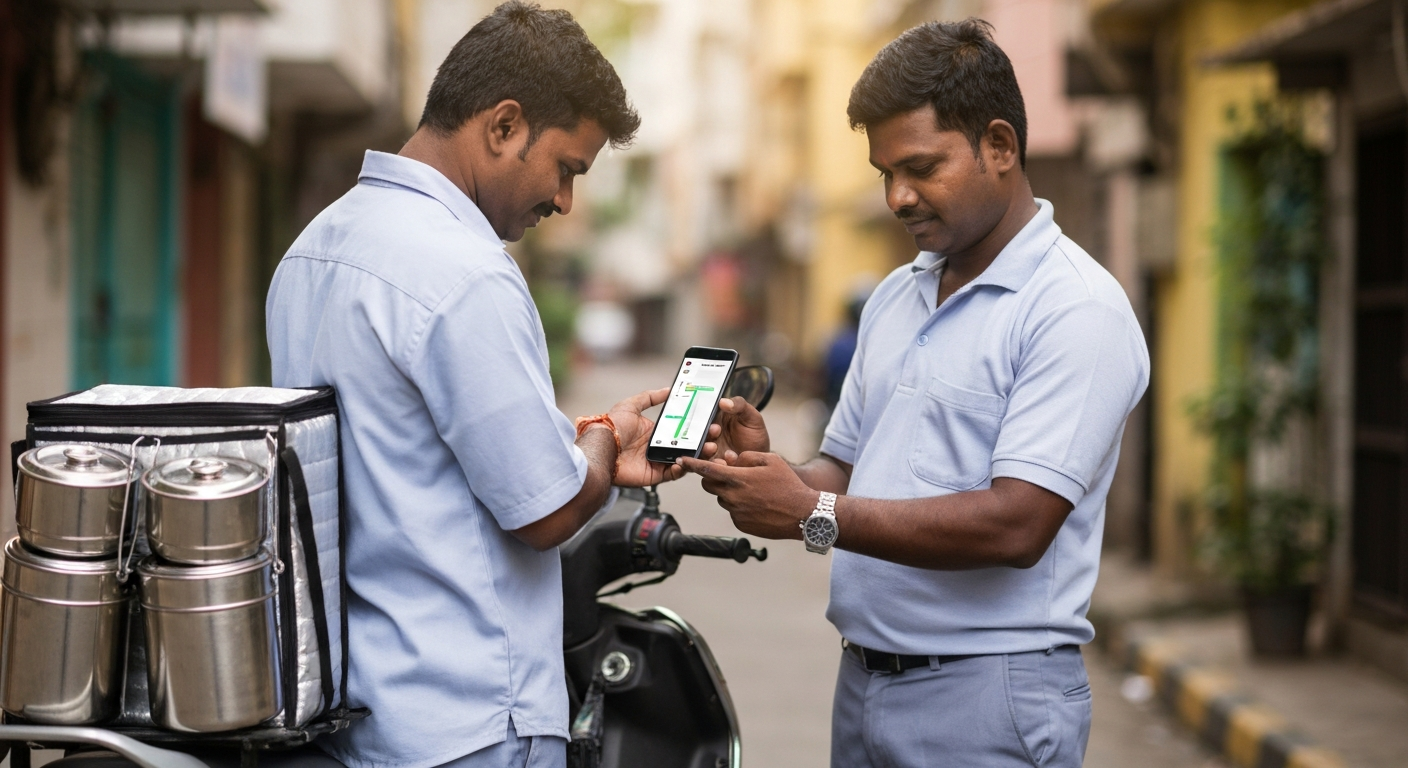
Manual route planning is inefficient when dealing with 500 customers whose schedules change daily. A paper list cannot update itself when 15 people pause their meals in the morning. A digital platform generates a smart rider list every morning.
- Clustering: It groups deliveries by location (e.g., Tower A, Tower B) to reduce travel distance.
- Filtering: It automatically removes “Paused” subscriptions, so riders never visit an empty house.
- Inventory Check: It tells the rider exactly how many Veg and Non-Veg boxes are needed for that specific route.
This route optimization allows one rider to deliver 40 tiffins in the same time it used to take for 25. This increase in operational efficiency directly boosts your bottom line.
5. Solving “Menu Fatigue”: The Customer Experience
Every morning, you likely face a flood of messages asking: “Aaj kya hai?” (What is on the menu?). Replying to these repetitive questions takes hours of your time and is not productive.
With a mobile app, you can publish the Weekly Menu in advance.
- Monday: Rajma Chawal
- Tuesday: Paneer Butter Masala
- Wednesday: Egg Curry
This transparency allows for customer self-service. If a customer dislikes a specific vegetable scheduled for Thursday, they can pause their subscription themselves. This reduces complaints about menu fatigue and stops the daily flood of messages. It gives the customer control, which improves customer retention.
6. The Solution: BuildMyStore for Tiffin Businesses
You might think of yourself as a chef, not a tech expert. In the past, building a custom app was expensive and complicated. Today, platforms like BuildMyStore.io have made it easy and affordable.
BuildMyStore allows you to launch a dedicated Tiffin Subscription App quickly.
- Smart Calendar: A simple calendar where customers can manage their dates, pauses, and renewals without calling you.
- Automated Billing: Easy UPI integration for wallet recharges, ensuring you get paid on time.
- Rider App: A digital list for your delivery staff, replacing confusing paper slips and ensuring accuracy.
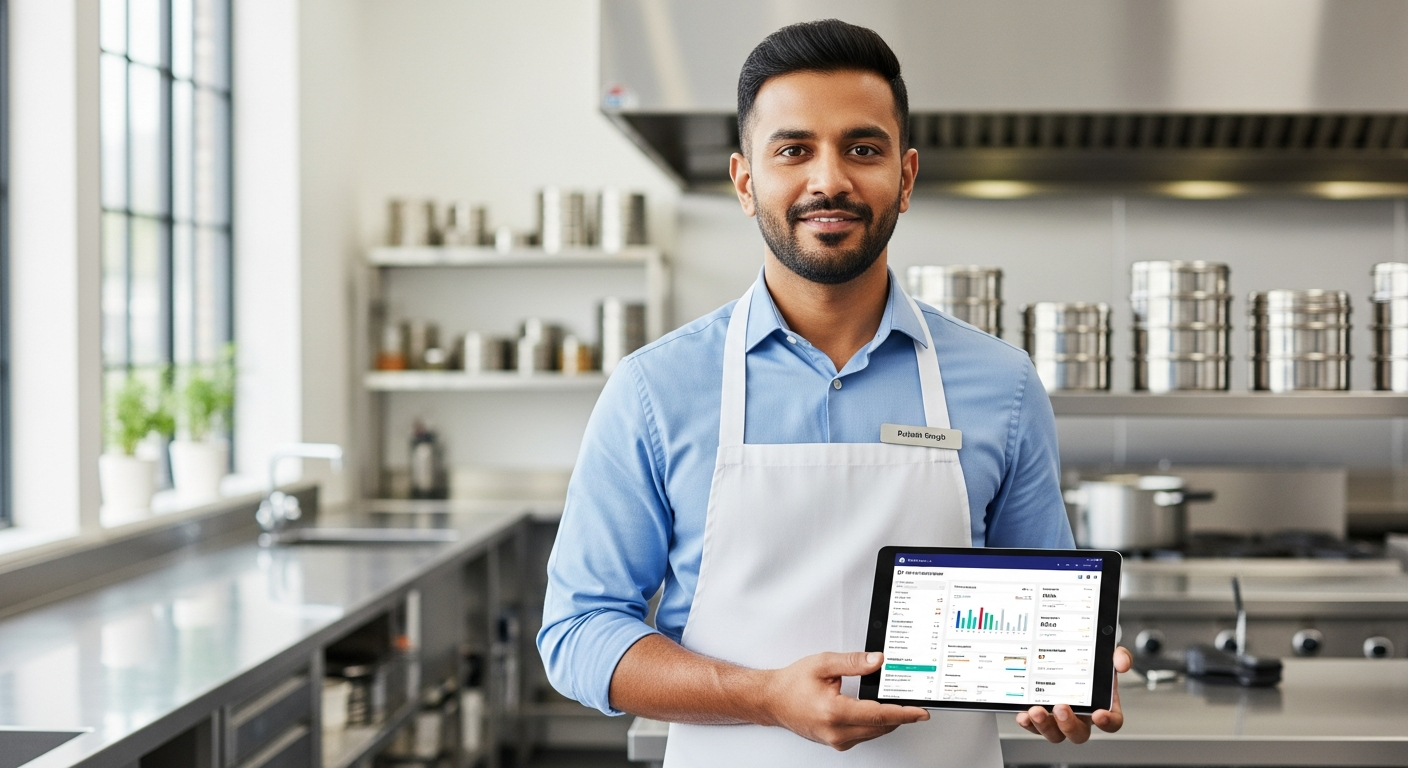
- Admin Dashboard: A clear view of your daily production needs (e.g., “Cook 420 Rotis today”), eliminating guesswork in the kitchen.
Conclusion: From Canteen to Cloud Kitchen
The market for daily meal subscriptions is growing fast. Urban professionals want the health benefits of home-cooked meals, but they also demand the convenience of modern e-commerce. They do not want to coordinate via phone calls; they want a seamless app experience.
If you continue to use Excel sheets and manual messaging, you will hit a limit. The operational chaos will eventually stop you from growing. However, if you digitize your operations, you can scale from 500 to 1,000 to 5,000 subscribers while keeping your business stable. Moving from a traditional “dabba service” to a tech-enabled “cloud kitchen” is the only way to succeed in the future.

Ready to stop the chaos? Use BuildMyStore to launch your own Tiffin Subscription App today. Stop managing lists and start managing growth.
Frequently Asked Questions
How do I handle daily cancellations in a tiffin service?
Instead of manual WhatsApp messages, use an app where customers can tap a Skip button. This automatically updates your kitchen production list and delivery routes in real-time, preventing food waste.
What is the best way to collect payments from 500 subscribers?
A prepaid digital wallet model is best. Customers recharge their balance in advance via UPI, and the cost of each meal is automatically deducted upon delivery. This eliminates the need for manual payment chasing.
Can I automate delivery routes for my tiffin riders?
Yes. Digital platforms like BuildMyStore generate smart rider lists that group deliveries by location and automatically filter out paused subscriptions, making the delivery process much faster and cheaper.